Tampilkan postingan dengan label your. Tampilkan semua postingan

Minggu, 26 Februari 2017

Pruning Hydrangea Prune your Hydrangea right

Pruning Hydrangea  Prune your Hydrangea right

Hydrangea (/ha?'dre?nd?i?/;common brands hydrangea or hortensia) is a genus of 70-75 types of flowering crops local to southern and eastern Asia (China, Japan, Korea, the Himalayas, and Indonesia) and the Americas. By far the greatest types diversity is in eastern Asia, china notably, Japan, and Korea. The majority are shrubs 1 to 3 meters tall, however, many are small trees, and others lianas reaching up to 30 m (98 feet) by climbing up trees and shrubs. They could be either evergreen or deciduous, though the greatly cultivated temperate types are all deciduous.Having been introduced to the Azores, H. macrophylla is quite typical now, particularly on Faial, which is known as the "blue island" due to the vast number of hydrangeas present on the island.Life cycleHydrangea blooms are produced from early spring to late fall months; they expand in flowerheads (corymbs or panicles) frequently at the ends of the stems.

Pruning Hydrangea  Prune your Hydrangea right

Usually the flowerheads contain two types of flowers: small non-showy blossoms in the center or interior of the flowerhead, and large, showy plants with large multi-colored sepals (tepals). These showy flowers are often prolonged in a ring, or to the exterior of the small flowers. Plant life in wild populations have few to nothing of the showy plants typically, while cultivated hydrangeas have been bred and picked to have more of the bigger type blossoms.There are two flower arrangements in hydrangeas with Corymb style inflorescens, which includes the commonly grown "bigleaf hydrangea"--Hydrangea macrophylla. Mophead blooms are large rounded flowerheads resembling pom-poms or, as the name indicates, the mind of an mop. In contrast, lacecap flowers bear round, flat flowerheads with a center core of subdued, small flowers surrounded by outer rings of larger flowers having showy sepals or tepals.

The flowers of some rhododendrons and viburnums can show up, initially, just like those of some hydrangeas.Colors and ground acidityIn most types the blooms are white, however in some types (notably H. macrophylla), can be blue, red, pink, light crimson, or dark purple. In these types the colour is afflicted by the presence of lightweight aluminum ions which are available or tied up depending upon the land pH. For H. macrophylla and H. serrata cultivars, the flower color can be dependant on the relative acidity of the soil: an acidic soil (pH below 7), will have available aluminum ions and produce flowers that are blue to purple typically, whereas an alkaline soil (pH above 7) will tie up aluminum ions and result in pink or red flowers.

This is caused by a color change of the flower pigments in the occurrence of aluminium ions which is often taken up into hyperaccumulating vegetation.[6] Minimizing the pH of potting soils or mixes usually will not change the bloom color to blue, because these soils haven't any aluminum ions. The capability to blue or green a hydrangea is influenced by the cultivar also. Some plants are selected for their ability to be blued, while some are bred and selected to be red, white or pink. The flower color of most other Hydrangea species is not afflicted by aluminum and can't be changed or shifted. Hydrangeas also have a nickname called 'Change Rose'.

Pruning Hydrangeas

Pruning Hydrangeas

Hydrangea Pruning Gardening Pinterest

Hydrangea Pruning  Gardening  Pinterest

Pruning Hydrangea Bushes Spring

Pruning Hydrangea Bushes Spring

Related to How To Prune Hydrangea Paniculata Trees Youtube

Related to How To Prune Hydrangea Paniculata Trees Youtube

Sabtu, 17 Desember 2016

Posted by Stein Your Florist Co. at 4:00 AM

Posted by Stein Your Florist Co. at 4:00 AM

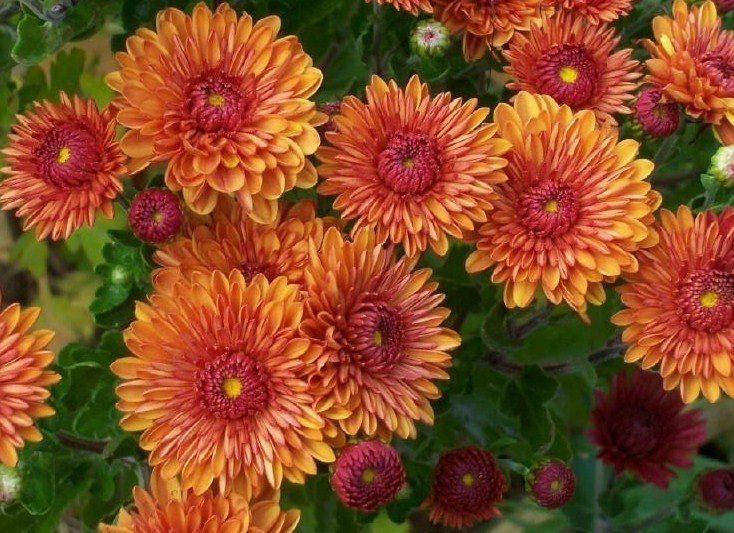
Chrysanthemums, sometimes called mums or chrysanths, are flowering plants of the genus Chrysanthemum in the family Asteraceae. They are native to Asia and northeastern European countries. Most species originate from East Asia and the center of diversity is in China. There are countless horticultural varieties and cultivars. The name "chrysanthemum" is derived from the Ancient Ancient greek:?????? chrysos (gold) and Aged Greek:??????? anthemon (flower).

Taxonomy

The genus once included more species, but was break up several decades ago into several genera, putting the economically important florist's chrysanthemums in the genus Dendranthema. The naming of the genera has been good, but a ruling of the International Botanical The legislature in 1999 changed the defining species of the genus to Chrysanthemum indicum, restoring the florist's chrysanthemums to the genus Chrysanthemum.The other species previously within the narrow view of the genus Chrysanthemum are now utilized in the genus Glebionis. The other overal separate from Chrysanthemum include Argyranthemum, Leucanthemopsis, Leucanthemum, Rhodanthemum, and Tanacetum.

Description

Wild Chrysanthemum taxa are herbaceous perennial plants or subshrubs. They have alternately arranged leaves divided into booklets with toothed or occasionally smooth edges. The compound inflorescence is an mixture of several flower minds, or sometimes a solo head. The head has a base covered in layers of phyllaries. The simple row of beam florets are white, yellowish or red; many horticultural specimens have been carefully bred to bear many series of ray florets in a great variety of colors. The disc florets of wild taxa are yellow. The fruit is a ribbed achene. Chrysanthemums, also known as 'mums', are one of the prettiest varieties of perennials that start blooming early in the fall. This is also known as favorite flower for the month of November.

Modern grown chrysanthemums are showier than their wild relatives. The flower heads occur in various forms, and is daisy-like or decorative, like aigrette or buttons. This genus contains many hybrids and thousands of cultivars developed for horticultural purposes. As well as the traditional yellow, other colors are available, such as white, purple, and red. The most crucial hybrid is Chrysanthemum x morifolium (syn. C. x grandiflorum), derived generally from C. indicum, but also involving other species.Over 140 varieties of chrysanthemum have gained the Royal Horticultural Society's Prize of Garden Merit.

Chrysanthemums are broken into two basic groups, garden hardy and exhibition. Garden hardy moms are new perennials capable of wintering in most northern latitudes. Exhibition kinds are not usually as sturdy. Garden hardies are defined by their capacity to generate an abundance of small blooms with little if any mechanical assistance, such as staking, and withstanding wind and rainwater. Exhibition varieties, though, require staking, overwintering in a relatively dry, cool environment, and sometimes digging in night lights.

The exhibition varieties can be used to create many amazing herb forms, such as large disbudded blooms, spray varieties, and many artistically trained forms, such as thousand-bloom, standard (trees), fans, hanging baskets, topiary, bonsai, and cascades.

Chrysanthemum blooms are divided into 10 different bloom forms by the US National Chrysanthemum Culture, Inc., which is in preserving the international category system. The bloom forms are defined by the way in which the ray and disk florets are arranged. Chrysanthemum blossoms are composed of many specific flowers (florets), each one capable of manufacturing a seedling. The disk florets are in the center of the bloom head, and the ray florets are on the perimeter. The ray florets are viewed as not perfect flowers, as they only have the female effective organs, while the storage florets are considered perfect flowers, as they have got both male and male reproductive organs.

Sports Entertainment News Archival photos View by collection

Sports Entertainment News Archival photos View by collection

Über 1.000 Ideen zu „November Geburts Blumen auf Pinterest März

Über 1.000 Ideen zu „November Geburts Blumen auf Pinterest  März

Burial Vault Selection

Burial Vault Selection

Chrysanthemum tattoos what do they mean? Tattoos Designs amp; Symbols

Chrysanthemum tattoos  what do they mean? Tattoos Designs amp; Symbols

Minggu, 27 November 2016

Plants for your Fall Garden Total Mortgage Underwritings Blog

Plants for your Fall Garden  Total Mortgage Underwritings Blog

Chrysanthemums, sometimes called mums or chrysanths, are flowering vegetation of the genus Chrysanthemum in the family Asteraceae. They are native to Asia and northeastern The european countries. Most species originate from East Asia and the center of diversity is in China. There are many horticultural varieties and cultivars. The name "chrysanthemum" comes from the Ancient Ancient greek language:?????? chrysos (gold) and Old Greek:??????? anthemon (flower).

Taxonomy

The genus once included more species, but was split several decades ago into several genera, putting the economically important florist's chrysanthemums in the genus Dendranthema. The naming of the genera has been good, but a ruling of the International Botanical Our elected representatives in 1999 changed the defining species of the genus to Chrysanthemum indicum, restoring the florist's chrysanthemums to the genus Chrysanthemum.The other species previously included in the narrow view of the genus Chrysanthemum are now used in the genus Glebionis. The other overal separate from Chrysanthemum include Argyranthemum, Leucanthemopsis, Leucanthemum, Rhodanthemum, and Tanacetum.

Description

Outdoors Chrysanthemum taxa are herbaceous perennial plants or subshrubs. They have alternately arranged leaves divided into leaflets with toothed or from time to time smooth edges. The chemical substance inflorescence is an series of several flower heads, or sometimes an one head. The head has a base covered in layers of phyllaries. The simple row of beam florets are white, yellowish or red; many horticultural specimens have been carefully bred to bear many lanes of ray florets in a great variety of colors. The disc florets of wild taxa are orange. The fruit is a ribbed achene. Chrysanthemums, also known as 'mums', are one of the prettiest varieties of perennials that start blooming early in the fall. This is also known as favorite flower for the month of November.

Modern grown chrysanthemums are showier than their wild relatives. The flower heads occur in various forms, and is daisy-like or decorative, like aigrette or buttons. This genus contains many hybrids and thousands of cultivars developed for horticultural purposes. In addition to the traditional yellow, other colors are available, such as white, purple, and red. The most important hybrid is Chrysanthemum x morifolium (syn. C. x grandiflorum), derived primarily from C. indicum, but also involving other types.Over 140 varieties of chrysanthemum have gained the Royal Horticultural Society's Honor of Garden Merit.

Chrysanthemums are broken into two basic groups, garden hardy and exhibition. Garden hardy mothers are new perennials capable of wintering in most northern latitudes. Exhibition kinds are not usually as sturdy. Garden hardies are defined by their ability to produce an abundance of small blooms with little if any mechanical assistance, such as staking, and withstanding wind and rainfall. Exhibition varieties, though, require staking, overwintering in a relatively dry, cool environment, and sometimes digging in evening lights.

The exhibition kinds can be used to create many amazing herb forms, such as large disbudded blooms, spray forms, and many artistically trained forms, such as thousand-bloom, standard (trees), fans, suspending baskets, topiary, bonsai, and cascades.

Chrysanthemum blooms are divided into 10 different bloom forms by the US National Chrysanthemum Society, Inc., which is in preserving the international distinction system. The bloom forms are defined by the way in which the ray and disk florets are arranged. Chrysanthemum flowers consist of many individual flowers (florets), each one capable of producing a seed. The disk florets are in the center of the bloom head, and the ray florets are on the perimeter. The ray florets are believed imperfect flowers, as they only have got the female successful organs, while the disk florets are considered perfect flowers, as they possess both male and male reproductive organs.

Chrysanthemum deadhead fading flowers, cut back to ground after

Chrysanthemum  deadhead fading flowers, cut back to ground after

Frosted fallen leaves lay softly fallen at the edge of the lane.

Frosted fallen leaves lay softly fallen at the edge of the lane.

How to Grow Chrysanthemums in Pots Growing Mums in Pots

How to Grow Chrysanthemums in Pots  Growing Mums in Pots

Sheffield, Jack frost and Chrysanthemums on Pinterest

Sheffield, Jack frost and Chrysanthemums on Pinterest

Selasa, 08 November 2016

Order here your Hydrangea plants

Order here your Hydrangea plants

Hydrangea (/ha?'dre?nd?i?/;common titles hydrangea or hortensia) is a genus of 70-75 varieties of flowering crops native to southern and eastern Asia (China, Japan, Korea, the Himalayas, and Indonesia) and the Americas. By far the greatest species diversity is within eastern Asia, notably China, Japan, and Korea. Most are shrubs 1 to 3 meters high, however, many are small trees, yet others lianas getting up to 30 m (98 ft) by climbing up trees. They can be either deciduous or evergreen, although cultivated temperate varieties are all deciduous widely.Having been introduced to the Azores, H. macrophylla is quite typical now, on Faial particularly, which is known as the "blue island" because of the multitude of hydrangeas present on the island.Life cycleHydrangea blossoms are produced from planting season to late autumn; they grow in flowerheads (corymbs or panicles) frequently at the ends of the stems.

Order here your Hydrangea plants

Usually the flowerheads contain two types of blooms: small non-showy plants in the guts or interior of the flowerhead, and large, showy bouquets with large brilliant sepals (tepals). These showy bouquets are extended in a ring often, or to the surface of the small flowers. Vegetation in outrageous populations routinely have few to none of them of the showy blooms, while cultivated hydrangeas have been bred and determined to have more of the bigger type blooms.There are two flower arrangements in hydrangeas with Corymb style inflorescens, which includes the commonly grown "bigleaf hydrangea"--Hydrangea macrophylla. Mophead blooms are large circular flowerheads resembling pom-poms or, as the name signifies, the comparative mind of a mop. On the other hand, lacecap flowers bear round, flat flowerheads with a center core of subdued, small flowers surrounded by outer rings of larger flowers having showy sepals or tepals.

The blossoms of some rhododendrons and viburnums can seem, initially, comparable to those of some hydrangeas.Colors and soil acidityIn most varieties the flowers are white, but in some species (notably H. macrophylla), can be blue, red, red, light purple, or dark purple. In these species the colour is afflicted by the existence of metal ions which can be found or tied up depending after the ground pH. For H. macrophylla and H. serrata cultivars, the flower color can be determined by the relative acidity of the soil: an acidic soil (pH below 7), will supply aluminum ions and typically produce flowers that are blue to purple, whereas an alkaline soil (pH above 7) will tie up aluminum ions and bring about pink or red flowers.

This is caused by a color change of the flower pigments in the occurrence of aluminium ions which may be taken up into hyperaccumulating plants.[6] Decreasing the pH of potting soils or mixes usually will not change the blossom color to blue, because these soils have no aluminum ions. The capability to blue or pink a hydrangea is inspired by the cultivar also. Some plants are selected for their ability to be blued, while some are bred and selected to be red, white or pink. The flower color of all other Hydrangea species is not damaged by aluminum and can't be changed or shifted. Hydrangeas also have a nickname called 'Change Rose'.

Order Online PreOrder Online Order By Phone InStore Only

Order Online PreOrder Online Order By Phone InStore Only

Hydrangea, Libelle : buy Hydrangea, Libelle / Hydrangea macro Libelle

Hydrangea, Libelle : buy Hydrangea, Libelle / Hydrangea macro Libelle

Hydrangea paniculata Limelight 1 shrub Buy online order yours now

Hydrangea paniculata Limelight  1 shrub Buy online order yours now

Buy hydrangea Hydrangea paniculata 39;Limelight PBR39;: Delivery by

Buy hydrangea Hydrangea paniculata 39;Limelight PBR39;: Delivery by